
Leslie Brooks, Ph.D
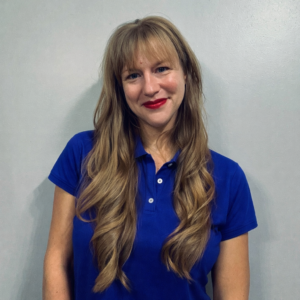
Leslie Brooks, Ph.D
Vice President of Sustainability
Certified Waste Solutions
About Leslie
“Reduce, Reuse, Recycle.” What became a catchy phrase to some became the moral code I grew up with. It was the first thing I remember learning, actively practicing, and subsequently advocating. It may then come as no surprise that I started working in the recycling industry at 13 and have spent the last 25 years in it since.
After earning my Bachelor’s in Environmental Science from Indiana University, I started hands on training in a scrap metal yard. I wanted to understand the work from the ground up, so I learned it the only way you really can, by doing it. Handling materials, inspecting inbound loads, identifying alloys, sorting, and seeing firsthand how contamination impacts value and performance.
That experience shaped everything. I learned why material identification matters, how commodity value is built and lost, and how every step in an operation connects to the next. Over time, my scope expanded from metals into paper, plastics, and electronics, and I found myself focused on one consistent challenge: finding viable markets for materials that others couldn’t place. I have always believed that if something was made, it deserves a second life.
I carried that perspective into my Ph.D. at the Golisano Institute for Sustainability at Rochester Institute of Technology. My research focused on a gap I kept seeing in the field, the disconnect between advancing recycling technologies and the real world understanding of how those facilities operate and what they actually need from technology to become more efficient.
My dissertation evaluated identification and sorting technologies for ferrous and nonferrous recycling and led to publications in the Journal of Waste Management and the Journal of Sustainable Metallurgy. The core argument was simple: increasing recycling rates is not enough. We also need to improve scrap utilization, reduce downcycling and the buildup of tramp elements, and consider implementing design for recycling and extended produce responsibility practices. Along the way, I developed technoeconomic and cost benefit models grounded in facility level applications, because I believe research should translate directly into operational results. I have also served as an NSF Fellow with the United Nations University in Bonn, Germany, contributing to global work around waste management and disaster resilience.
Today, as Vice President of Sustainability at Certified Waste Solutions, I work with clients across the country to redefine what waste means and build systems that are both environmentally responsible and financially sound. I am devoted to improving the efficiency of operations, diverting materials from landfill, and developing strategies to ensure what gets promised can actually be delivered.
Across my career, I have helped divert millions of tons of material from landfills, but the work has never been about volume alone. It is about improving understanding of the recycling process, unlocking markets for overlooked materials, and driving greater system efficiency.